

When planning a scaffolding setup, understanding the differences between system scaffold and frame scaffold is essential to selecting the right solution for your project. Each has unique benefits, applications, and configurations, and the better informed your choice, the safer and more efficient your build will be.
Understanding Frame Scaffold
Frame scaffold is the more traditional type, often used in general construction, residential builds, and exterior work like siding and painting. It consists of standardized welded frames (typically ladder or walk-through styles) that are connected vertically and laterally with cross braces.
Key Features of Frame Scaffold:
- Simplicity: The frame-and-brace structure makes assembly intuitive and fast.
- Speed of Setup: Fewer components mean faster erection, ideal for jobs requiring quick mobilization.
- Cost-Effective: A practical choice for projects with repetitive elevations and standard configurations.
Bil-Jax offers a wide range of frame scaffold systems designed for durability, compatibility, and ease of use. Their equipment includes steel walk-through and ladder frames, cross braces, guardrails, and durable planks, creating stable and secure access for workers.
Understanding System Scaffold
System scaffold uses vertical posts (standards) and horizontal or diagonal members (ledgers, transoms) that lock together using pre-engineered connection points. This modular approach allows for high flexibility in shape, size, and layout.
Key Features of System Scaffold:
- Versatility: Ideal for complex projects, curved structures, and varying elevation changes.
- Load Capacity: Engineered for heavy-duty work and uneven surfaces.
- Adaptability: Supports high-rise construction, industrial maintenance, and custom installations.
Bil-Jax’s system scaffold product line includes ring lock and other modular systems compatible with a variety of projects. These systems are built with precision and safety in mind, featuring well-crafted components that support complex configurations and maintain structural integrity.
Assembly and Disassembly Process Differences

The way scaffolding is assembled and taken down has a strong influence on project efficiency, safety, and labor planning. Understanding the differences between system scaffold vs frame scaffold setup procedures can help you choose the right solution for your team and timeline.
Frame Scaffold: Straightforward and Familiar
Frame scaffold is known for its intuitive assembly process. Crews typically start by positioning the welded frames, then connect them with cross braces to build the structure tier by tier. The process is straightforward, making it well-suited for workers with general construction experience.
Assembly:
- Frames are set upright and connected with cross braces.
- Fewer overall components mean less sorting and handling.
- Minimal specialized training is required, most crews can assemble frame scaffold quickly after a brief orientation.
Disassembly:
- The process is reversed: braces are removed, and frames are taken down one section at a time.
- Each piece is handled separately, which can take longer on larger projects.
- This simplicity makes frame scaffold ideal for jobs with repetitive layouts or tight schedules, where rapid mobilization is a priority.
System Scaffold: Modular and Efficient for Complex Jobs
System scaffold uses a modular approach, with vertical posts and horizontal or diagonal members locking together at fixed connection points. While the components may seem more complex at first glance, their design streamlines both assembly and disassembly, especially on projects with non-standard shapes or elevation changes.
Assembly:
- Components are laid out and connected using built-in locking mechanisms or pins.
- The system allows for rapid vertical and horizontal expansion, adapting to complex structures or uneven ground.
- Some training is recommended to ensure efficient and safe assembly, but the process often requires less manual labor per square foot than traditional frame scaffold.
Disassembly:
- Components are unlocked and separated in the reverse order.
- Standardized parts stack neatly for transport, saving time and reducing effort on site cleanup.
- For projects requiring high adaptability or intricate configurations, system scaffold can significantly reduce setup and takedown time, helping crews move efficiently from one phase to the next.
Assembly & Disassembly Comparison
Assembly and disassembly look different for each scaffold type. Frame scaffold tends to be simple to set up, with an intuitive layout that crews can learn with little training. It moves quickly on straight or repeated sections, though it relies on more hands-on labor since each part is placed one at a time. System scaffold uses a modular approach that takes a bit more training at first, yet it becomes efficient on builds with changing heights or shapes. Large installations often need fewer workers because the connections guide the structure into place. When the job wraps up, the frame scaffold must be broken down piece by piece, while the system scaffold comes apart with quick-release points that make stacking and transport easier.
Bil-Jax Advantage
Both Bil-Jax frame and system scaffold lines are engineered for efficient setup and takedown, with durable components designed to handle repeated use. If you need the straightforward speed of frame scaffold or the modular efficiency of system scaffold, Bil-Jax solutions help your crew maximize productivity and minimize downtime.
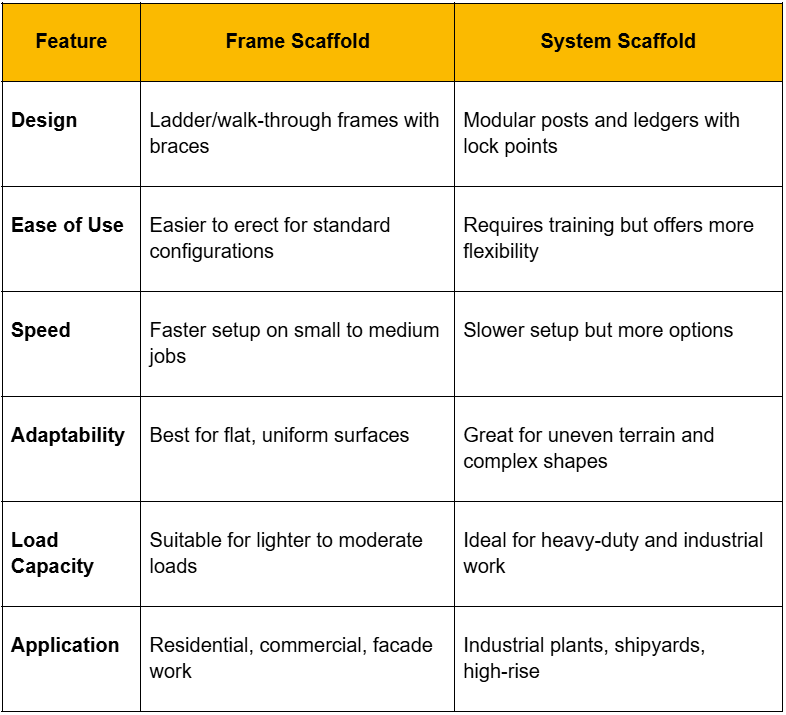
System Scaffold vs Frame Scaffold: Key Differences
While both systems serve similar functions, understanding how they differ can help determine which scaffold type is best suited for your project’s specific demands.
Cost Considerations: What Impacts Your Investment?
When evaluating scaffolding solutions, cost is a key factor, but it’s about more than just the sticker price. The total investment includes not only the initial purchase or rental, but also labor, efficiency, and long-term value.
Frame Scaffold
Frame scaffold is often chosen for its lower upfront cost and straightforward assembly. With fewer components and a familiar design, frame scaffold can be a cost-effective choice for projects with standard layouts and short turnaround times. Labor costs may also be lower, as crews can assemble and disassemble these systems quickly with minimal training.
System Scaffold
System scaffold typically involves a higher initial investment due to its modular, engineered components. However, the efficiency gained in complex or large-scale projects can offset this cost over time. Faster assembly and disassembly, reduced labor requirements, and adaptability for future projects contribute to overall savings in the long run.
Factors That Influence Cost
- Project Complexity: Jobs with unique shapes, elevation changes, or challenging site conditions may benefit from the flexibility of system scaffold, justifying a higher initial investment.
- Labor Efficiency: Systems that reduce assembly time and require fewer workers can lower overall labor expenses.
- Reuse and Longevity: Durable, modular scaffolds may deliver greater value over multiple projects, spreading the investment across more uses.
- Maintenance and Compatibility: Choosing a system with robust components and compatibility across projects can help control ongoing costs.
Which Scaffold Is Right for Your Project?
Choosing between system and frame scaffolding depends on your job site, budget, and layout needs:
- Choose Frame Scaffold if your project involves uniform elevation, quick setup needs, or small-to-medium scale commercial and residential work. It’s user-friendly and efficient for standard builds.
- Choose System Scaffold when you need a highly adaptable setup, custom configurations, or heavy load-bearing capacity. This is particularly useful for complex projects or maintenance in industrial environments.
Bil-Jax Scaffold Solutions

If your job calls for frame scaffold simplicity or system scaffold versatility, Bil-Jax provides industry-grade solutions that support safety, reliability, and strong performance. With components built to last and engineered for real-world use, Bil-Jax scaffolding systems are trusted across construction and industrial markets.
Explore our full line of System Scaffold and Frame Scaffold products to find the right match for your next project.
Build With Confidence, Build With Bil-Jax
Selecting the right scaffold type empowers your team to work more safely and efficiently. By understanding the unique strengths of each system, you can make informed choices that support your job’s demands, no matter if you’re scaling a skyscraper or re-siding a house.
Need help selecting your scaffold? Contact Bil-Jax today for expert guidance and dependable equipment you can trust.