
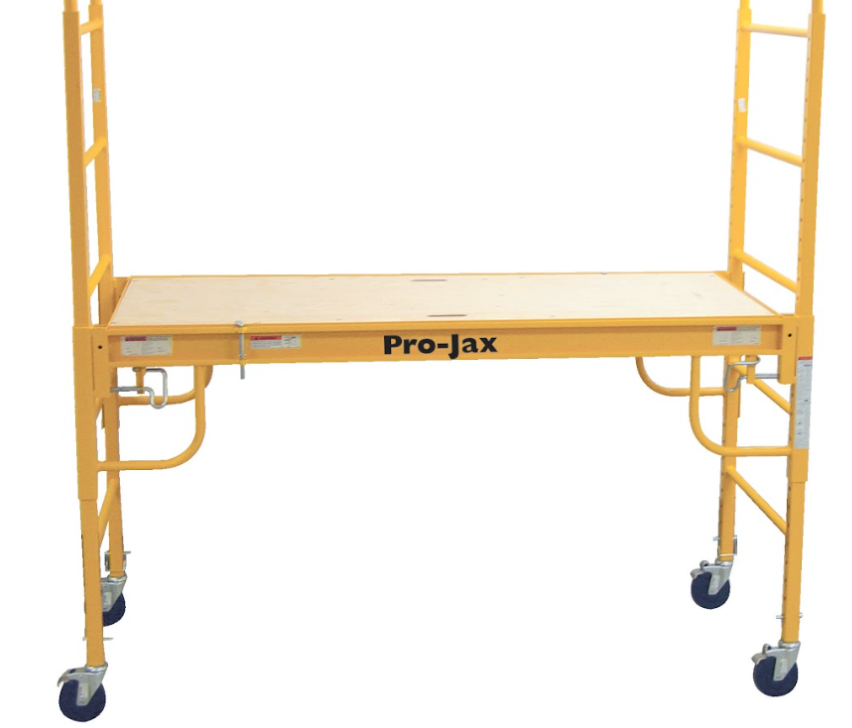
Rolling scaffolds, also known as mobile scaffolds or rolling scaffold towers, offer flexibility and convenience on dynamic job sites. But with mobility comes risk. To ensure safe use, OSHA has established specific regulations that govern the setup, height limits, movement, and safety protocols for these wheeled structures.
In this guide, we’ll break down the key OSHA requirements for rolling scaffolding to help crews stay safe and compliant while addressing common questions like how tall a rolling scaffold can be, who can inspect it, and what OSHA expects when it comes to mobile scaffold systems.
What Is a Rolling Scaffold?
A rolling scaffold is a freestanding scaffold supported by casters or wheels, designed to be moved easily across flat, stable surfaces. Unlike stationary frame scaffolds, rolling scaffolds are frequently used for tasks that require short-term access at various points along a structure.
Bil-Jax offers several OSHA-compliant rolling scaffold solutions, including the Rolling Tower and EZ-RAX, both designed for safety, speed, and mobility.
OSHA Height Requirements: How Tall Can a Rolling Scaffold Be?
One of the most commonly misunderstood OSHA rules involves height limits. According to OSHA 1926.452(w)(2), a rolling scaffold cannot exceed four times its minimum base dimension in height, unless the scaffold is restrained from tipping. Put simply, a rolling scaffold cannot exceed a 4:1 height-to-base ratio without proper stabilizers.
It’s important to note that state or local regulations may impose stricter requirements. For example, California OSHA (Cal/OSHA) and some municipalities enforce a 3:1 ratio for added safety, especially on public works or high-traffic job sites.
Example:
If the base of your rolling tower is 3 feet wide, the maximum allowable height is 12 feet.
Exceeding this ratio without proper restraints can lead to instability and significant safety violations.
This is one of the most cited OSHA rolling scaffold height requirements, and an area where many crews inadvertently violate scaffold regulations.
OSHA Mobile Scaffold Movement Regulations
Safe mobility is a key feature of rolling scaffolds—but only when used under OSHA-approved conditions. Here’s what the agency requires when it comes to OSHA mobile scaffolds:
- Wheels must be locked during use. Casters must have functional brakes that are engaged any time someone is on the scaffold.
- Scaffolds should not be moved while occupied, unless all of the following conditions are met:
- The surface on which the scaffold is being moved is within 3 degrees of level and free of pits, holes, or obstructions (1926.452(w)(6)(i)).
- The height-to-base width ratio of the scaffold during movement is 2:1 or less, unless the scaffold is engineered to meet or exceed nationally recognized stability test requirements (see Appendix A, 2(w)).
- Outrigger frames, when used, are installed on both sides of the scaffold.
- No employee is on any part of the scaffold that extends beyond the wheels, casters, or other supports.
Always remember that state or local regulations may impose stricter standards. For example, California often enforces a 3:1 height-to-base ratio, even for stationary scaffolds, and some municipalities have additional restrictions based on public safety concerns.
These movement requirements are clearly outlined in OSHA mobile scaffold guidance to minimize fall and tip hazards.
Fall Protection on Rolling Scaffolding
OSHA requires fall protection for scaffolding platforms at heights above 10 feet. For rolling scaffolds, this means:
- Guardrails must be installed on all open sides and ends of the platform.
- Platforms must be fully planked or decked. Gaps should be minimized and planks must be secured to prevent slipping.
- Toe boards may be required to prevent tools or materials from falling.
Importantly, crossbracing alone does not substitute for guardrails. A compliant system includes top rails, midrails, and toe boards where applicable.
For added safety and peace of mind, consider using OSHA scaffold planks from Bil-Jax. These planks are engineered to meet stringent standards while providing reliable strength and stability on rolling scaffolding systems.
Scaffold Regulations: Inspection and Competency Requirements
A “competent person” must inspect rolling scaffolding before each work shift and after any occurrence that may affect its integrity (e.g., movement, impact, weather events). This person should be trained to recognize scaffold hazards and authorized to take corrective action.
For more on who qualifies as a competent scaffold inspector, see our article on who is authorized to inspect a scaffold.
Worker Training: Meeting Scaffold Laws
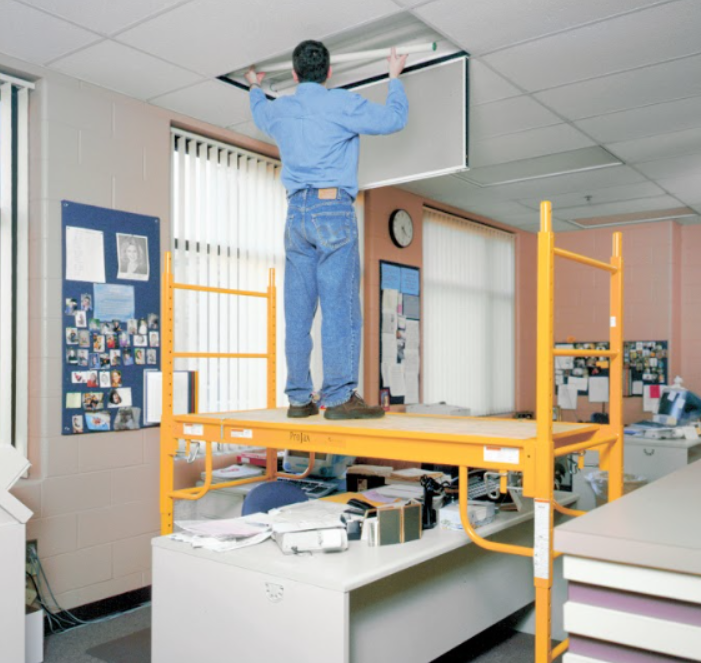
All employees who use scaffolds must be trained by a qualified person. Training should include:
- Identification of fall hazards
- Safe use and movement of rolling scaffolds
- Understanding height limitations and securing methods
- Proper use of guardrails, ladders, and locking wheels
Compliance with these scaffolding laws helps prevent accidents and ensures that workers understand their responsibilities under OSHA.
Common Violations to Avoid
To ensure full OSHA compliance, it’s important to recognize and avoid the most frequent mistakes crews make with rolling scaffolds. Here are some of the most common violations:
- Exceeding the 4:1 height-to-base ratio without restraints
- Missing or inadequate guardrails
- Improper or occupied movement of scaffolds
- Unlocked wheels during use
- Lack of inspection or training documentation
By proactively avoiding these missteps, contractors reduce the risk of injuries and OSHA citations.
OSHA-Compliant Rolling Scaffold Systems from Bil-Jax
Bil-Jax rolling towers and mobile scaffold systems are designed specifically with OSHA compliance, professional-grade durability, and ease of use in mind. Our commitment to jobsite safety shows in every weld, joint, and locking mechanism—delivering scaffolding solutions that don’t just meet regulations, but go above and beyond them.
Trusted by contractors and facility managers across the country, Bil-Jax rolling scaffold towers are ideal for interior maintenance, exterior repair, and everything in between. Each system is built to withstand real-world job site demands, offering:
- Industrial-strength locking casters for stability during use and secure mobility between tasks
- Fully planked, anti-slip platforms that support safe and efficient work at height
- Guardrail system compatibility to meet OSHA fall protection requirements
- Adjustable height configurations to suit a range of ceiling heights and applications
From commercial build-outs to daily maintenance, Bil-Jax rolling scaffolding delivers the safety, strength, and versatility needed to get the job done right.
Stay Safe, Stay Compliant
Understanding and following OSHA rolling scaffold requirements is crucial for safe jobsite performance. From height limits to caster locking and guardrail setups, every detail matters. With the right training and OSHA-compliant equipment, contractors can protect workers and maintain a productive, accident-free environment.
Looking for OSHA-compliant rolling scaffolding systems? Explore Bil-Jax rolling towers and EZ-RAX to find the right solution for your job site.