

In construction, both scaffolding and shoring are temporary support systems, but they serve very different purposes. Understanding the difference between scaffolding and shoring is fundamental for selecting the right solution for your project.
This guide explores the difference between shoring and scaffolding so you can choose the right system for your next job.
What Is Scaffolding?
Scaffolding is a temporary structure used to support workers and materials during the construction, repair, or maintenance of buildings and other structures. It is designed to provide access to hard-to-reach areas at various heights.
Common scaffolding features include:
- Platforms for standing and placing tools/materials
- Guardrails and toe boards for fall protection
- Vertical and horizontal frames for support
- Rolling or fixed bases for stability and mobility
Bil-Jax offers a full line of scaffolding solutions, including frame scaffolding, rolling towers, and system scaffolds that meet OSHA requirements and improve job site safety.
What Is Shoring?
Shoring is a temporary support system used to support a structure, excavation, or formwork during construction. It is often used when there is a risk of collapse or movement and is especially common during structural repairs, demolition, or excavation.
Shoring applications include:
- Supporting walls during renovations
- Stabilizing trenches or tunnels
- Holding up concrete formwork until it sets
- Reinforcing compromised structures
Shoring often uses vertical or angled supports such as posts, shores, or shoring jacks to distribute weight and provide lateral stability.
Scaffolding vs Shoring: Key Differences
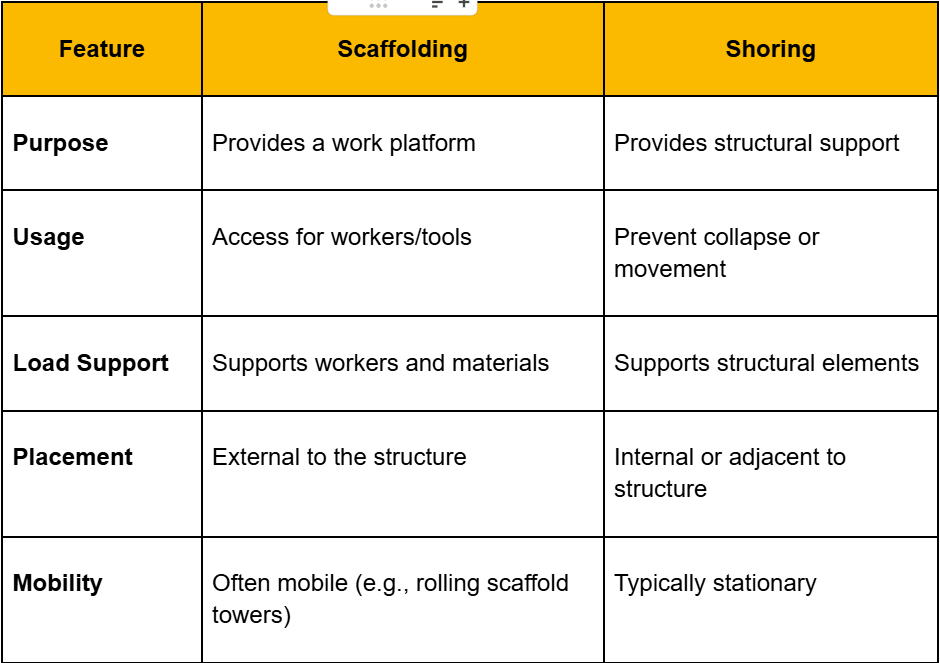
The table below provides a side-by-side comparison to highlight the distinct roles and features of scaffolding and shoring systems:
What Is a Shoring Jack?
A shoring jack is a type of adjustable support used in shoring applications. It is designed to bear vertical loads and is often used under slabs, beams, or ceilings that need temporary reinforcement. While they look somewhat similar to scaffolding components, their function is entirely structural rather than access-related.
Can Scaffolding Be Used as Shoring?
Scaffolding and shoring serve different purposes, and they aren’t automatically interchangeable. Scaffolding is typically designed to support workers and light materials, while shoring is engineered to carry structural loads such as concrete formwork.
However, Bil-Jax’s frames can be used for shoring when they are properly designed and configured for that purpose. This means the system must meet the required load capacity and be set up according to engineering specifications and manufacturer guidelines.
The key is determining the primary use of the system:
- If the platform is mainly for workers to stand on, it is considered scaffolding.
- If it is being used to support formwork or structural loads, it is functioning as shoring.
Always consult engineering guidance when determining how a frame system should be used, and ensure the correct OSHA and ANSI standards are followed.
Design and Load-Bearing Differences
Although both scaffolding and shoring are temporary support systems, they are engineered with distinct goals in mind—reflected in their design and load-bearing capacity.
Scaffolding systems are built to support dynamic loads, such as workers moving, tools being shifted, and materials being temporarily placed. These structures prioritize accessibility, flexibility, and ease of assembly, which is why many scaffolds feature modular designs, rolling bases, and integrated safety rails.
In contrast, shoring systems are designed to carry static, heavy loads, often bearing the weight of concrete slabs, structural walls, or failing building components. Shoring must meet strict structural engineering criteria, as failure could result in a partial or total collapse. Shoring jacks and vertical supports are typically more than scaffold frames and are placed directly under the area requiring stabilization.
These fundamental design distinctions are why the way a system is used, not the equipment itself, determines whether it is functioning as scaffolding or shoring. Using a system in a way that exceeds its intended load capacity or engineering design can create serious safety risks and lead to OSHA violations.
Configuration and Materials Used
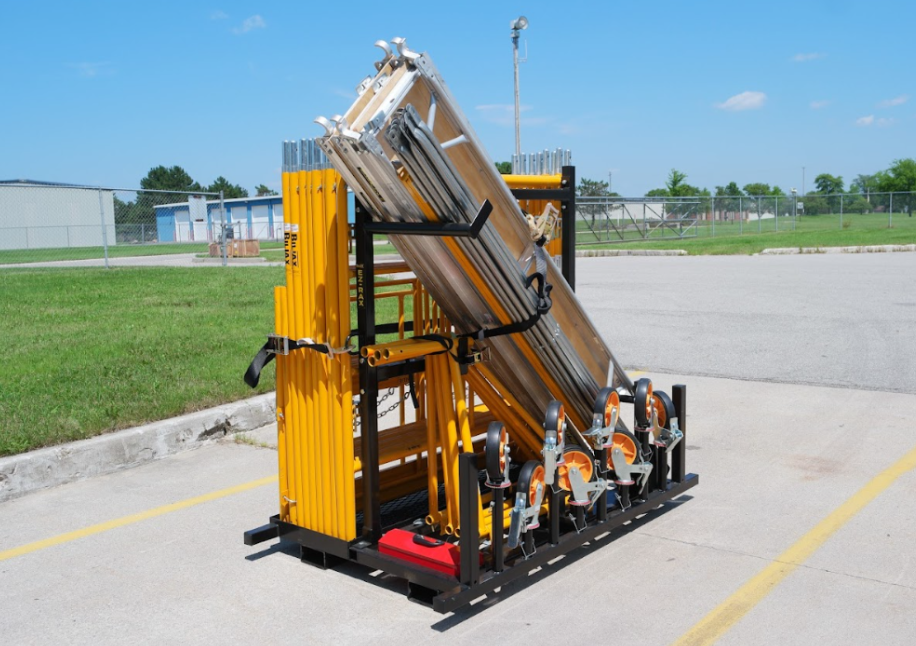
Both scaffolding and shoring systems can be configured in various ways depending on the project requirements. However, their configurations and materials reflect the different demands placed on each system.
Scaffolding Configurations
Scaffolding is designed for modularity and adaptability. Systems like frame scaffolds and system scaffolds can be assembled in custom layouts to accommodate complex elevations, tight access points, or high elevations. For example, Bil-Jax offers rolling towers and system scaffold solutions that can be configured to meet both small- and large-scale access requirements while complying with OSHA regulations.
Shoring Configurations
In contrast, shoring configurations are typically more linear and vertical in design. They are arranged to provide maximum vertical load-bearing capacity with minimal lateral movement. Shoring jacks and posts are strategically positioned beneath structural elements to ensure even weight distribution and prevent collapse.
Materials Matter
The materials used also vary based on function. Scaffolding components are typically made from high-strength steel or aluminum to balance strength with portability. Bil-Jax uses American-made, high-grade steel for its scaffolding systems, manufactured to strict tolerances to ensure performance and durability under daily job site conditions.
Shoring equipment, on the other hand, is often made from heavier gauge steel to withstand the significant forces involved in structural support. While scaffolding prioritizes safe access and movement, shoring prioritizes static strength and stability.
Know the Difference, Build with Confidence
Understanding the difference between shoring and scaffolding is essential to maintaining job site safety and efficiency. Scaffolding helps crews reach where they need to work. Shoring ensures the structure remains stable during critical phases of construction or repair.
Looking for safe, OSHA-compliant scaffolding? Explore Bil-Jax Scaffolding Systems to find the right equipment for safe, compliant access, backed by decades of engineering expertise.